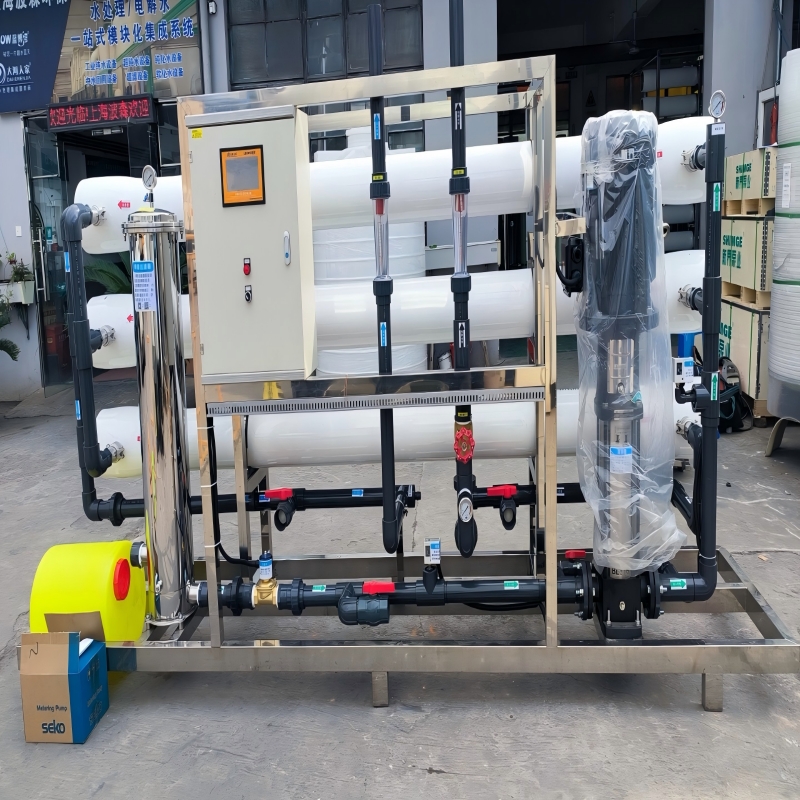
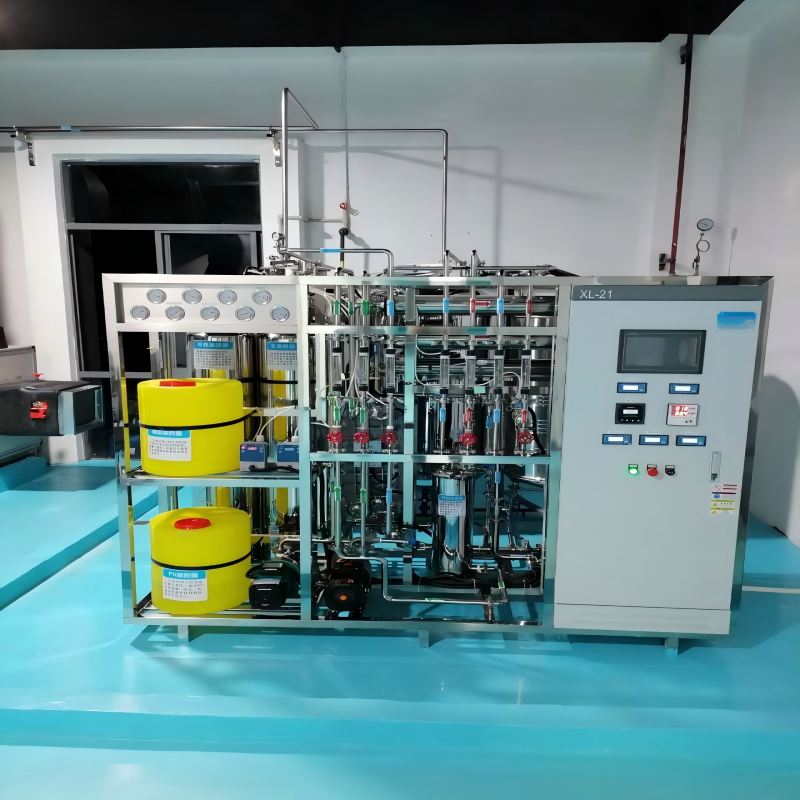
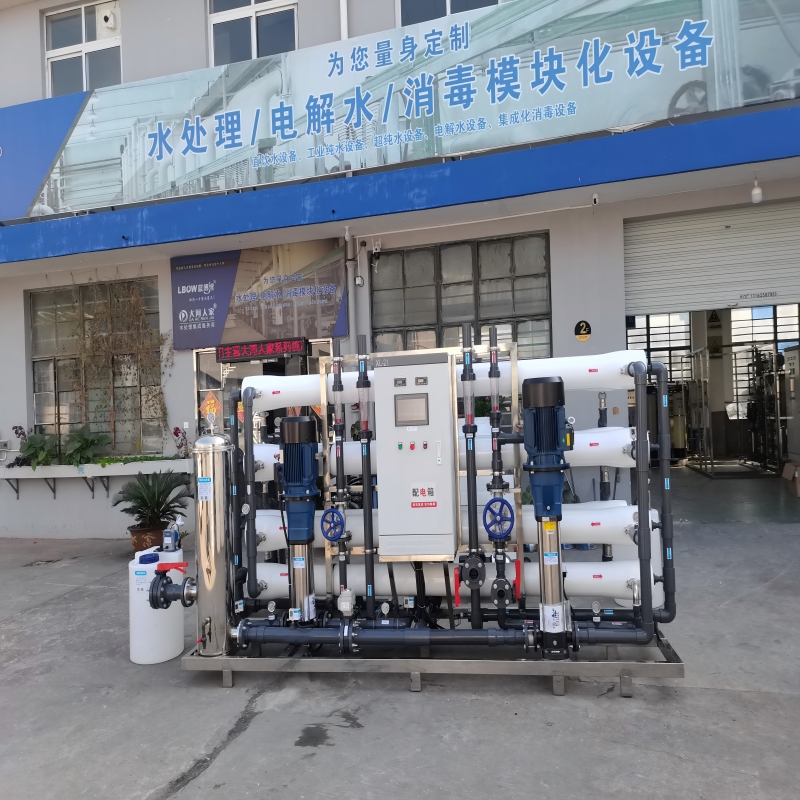
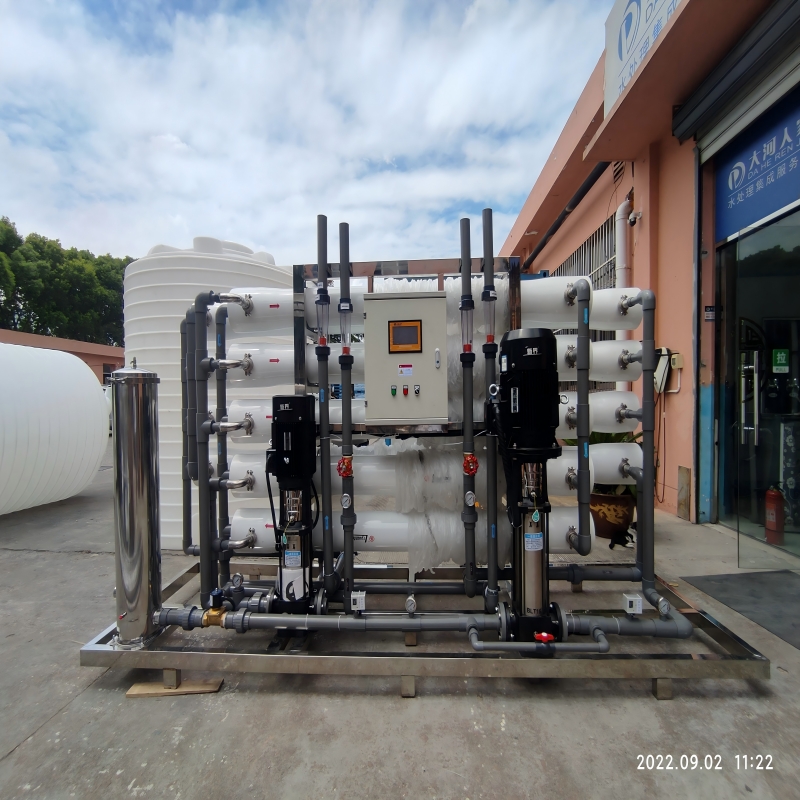
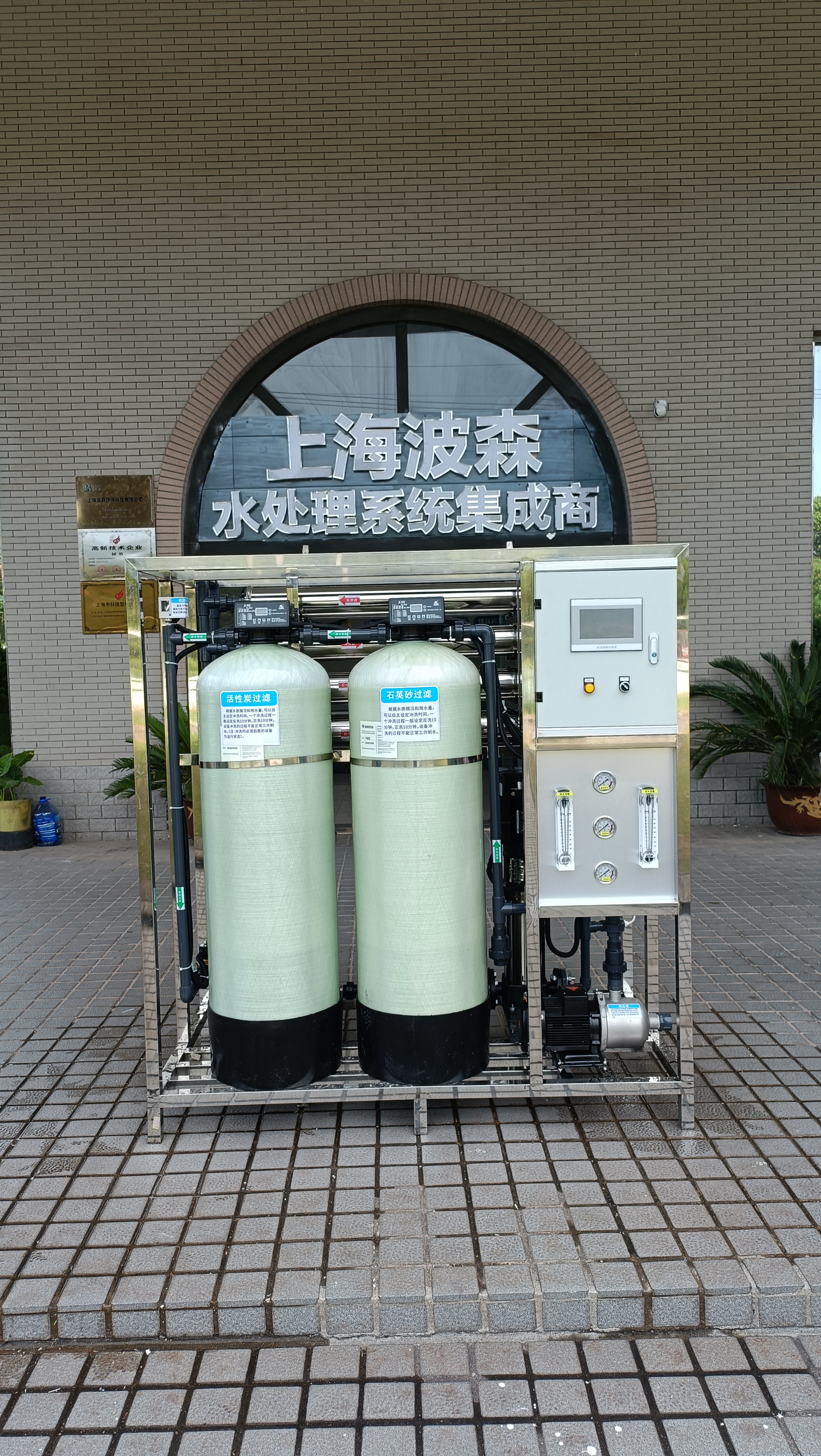
500 Litre Ultra-Pure Water Generation System (500 L/H)
*Principle · Process Flow · Application Fields*
I. Working Principle
The ultrapure water system employs a multi-stage coupled process consisting of "pre-treatment for turbidity removal + reverse osmosis desalination + continuous electrodeionization (EDI) for advanced desalination + final polishing," progressively purifying standard tap water into electronic-grade ultrapure water with a resistivity of ≥18.2 MΩ·cm. The core technical principle is as follows:
• Multi-stage coupled deep desalination: The water undergoes pretreatment to remove suspended solids, residual chlorine, and hardness; thereafter, a two-stage reverse osmosis (RO) system retains over 98% of ions and organic compounds; the resulting water then enters an EDI module, where it is subjected to continuous deep desalination under the influence of an electric field, progressively approaching the theoretical pure water limit.
• Continuous Electrodeionization (EDI) without acid–base regeneration: The EDI system utilizes an electric field to continuously regenerate ion exchange resins, eliminating the need for acid–base regeneration or chemical discharge. This approach not only ensures stable effluent conductivity (≥15–18 MΩ·cm) but also complies with environmentally friendly operating requirements, thereby avoiding the wastewater contamination associated with traditional mixed-bed systems.
• Final polishing ensures electronic-grade water quality: The system is equipped with a 185/254 nm dual-wavelength UV sterilization and TOC reduction unit coupled with a 0.22 μm final filtration stage; an optional polishing mixed-bed can be added as an additional safeguard to ensure that the produced water meets the following specifications: stable resistivity ≥ 18.2 MΩ·cm, TOC ≤ 30 ppb, and bacteria ≤ 0.1 CFU/mL.
II. Process Flow
The system employs a three-stage functional configuration: "Raw water → Pre-treatment → Two-stage RO → EDI → Final polishing → Ultra-pure water distribution"; its rated production capacity is 500 L/h ≈ 0.5 m³/h, and the entire process is automatically controlled by a PLC.
```
Raw water tank (buffer tank)
↓raw water pump
Multi-media filtration → Activated carbon filtration → Water softening/anti-scaling chemical dosing → 5 μm security filtration (pre-treatment for turbidity and chlorine removal)
↓ Primary High-Pressure Pump
Primary RO membrane stack (desalination rate ≥98%, concentrated water discharge)
↓ Secondary High-Pressure Pump
Secondary RO membrane stack (deep desalination; product water conductivity ≤ 1–2 μS/cm)
↓
EDI module (Electric Field Continuous Desalination; effluent resistance: 15–18 MΩ·cm)
↓
Polished mixed bed (optional – nuclear-grade resin – final assurance)
↓ 185/254 nm dual-wavelength UV sterilization and TOC reduction
0.22 μm terminal filtration
↓
Ultra-pure water tank (nitrogen-sealed/hygienic grade) → Constant-pressure water supply pump → Water usage point
```
① Pre-treatment stage: The raw water undergoes multi-media filtration to remove suspended solids and colloids; activated carbon adsorbs residual chlorine and organic compounds; softening or scale inhibition chemical dosing prevents CaCO₃/MgCO₃ scaling; a 5 μm security filtration system protects the high-pressure pump and RO membrane, ensuring that the RO feed water has an SDI ≤ 3 and residual chlorine levels approach zero.
② Two-stage reverse osmosis + EDI section: The primary high-pressure pump delivers the pretreated water to the primary RO membrane stack, where the vast majority of ions, organic compounds, and microorganisms are retained; the primary product water is then conveyed by the secondary high-pressure pump to the secondary RO unit for further purification, reducing its conductivity to approximately 1–2 μS/cm, thereby providing high-quality feed water for the EDI system; the EDI system performs continuous, deep desalination under the synergistic action of an electric field and ion-exchange resin, resulting in an outlet water resistivity of 15–18 MΩ·cm, eliminating the need for acid-or alkali-based regeneration.
③ Terminal polishing stage: The EDI-generated water is subjected to dual-wavelength ultraviolet irradiation (185/254 nm) to degrade TOC and eliminate microorganisms, followed by terminal filtration with a 0.22 μm filter to remove particulates and bacteria; where necessary, an optional polishing mixed-bed treatment is applied to ensure final water quality. The water is then stored in an ultrapure water tank and pumped to all water usage points via a constant-pressure pump, ensuring that the water quality remains consistently compliant with standards at the terminal point.
III. Application Areas
• Electronic semiconductors and chip cleaning: Provides 18.2 MΩ·cm ultrapure water for wafer cleaning, development, and electroplating processes to prevent ion or particle contamination of chips.
• Pharmaceutical preparations and Water for Injection (WFI) pre-treatment: Serving as the primary water source for the preparation of purified water and Water for Injection, it complies with the stringent GMP requirements regarding TOC, bacteria, and endotoxins.
• Laboratory and Analytical Testing: Precision instruments such as high-performance liquid chromatography (HPLC), atomic absorption spectrometry, and mass spectrometry systems, along with high-purity water for physicochemical analysis, ensure the accuracy of test results.
• Precision chemical and cosmetic formulation: high-end reagents, fine chemical synthesis, and pure water preparation for cosmetics – ensuring that impurities do not affect product purity or stability.
• Optical coatings and display panels: optical lens coatings; ultrapure water for LCD/OLED panel cleaning to prevent water marks and particle defects.
• Research institutions and testing centers: Daily ultra-pure water supply for research institutes, university laboratories, and third-party testing agencies – ideal for low-flow, high-frequency water usage scenarios.