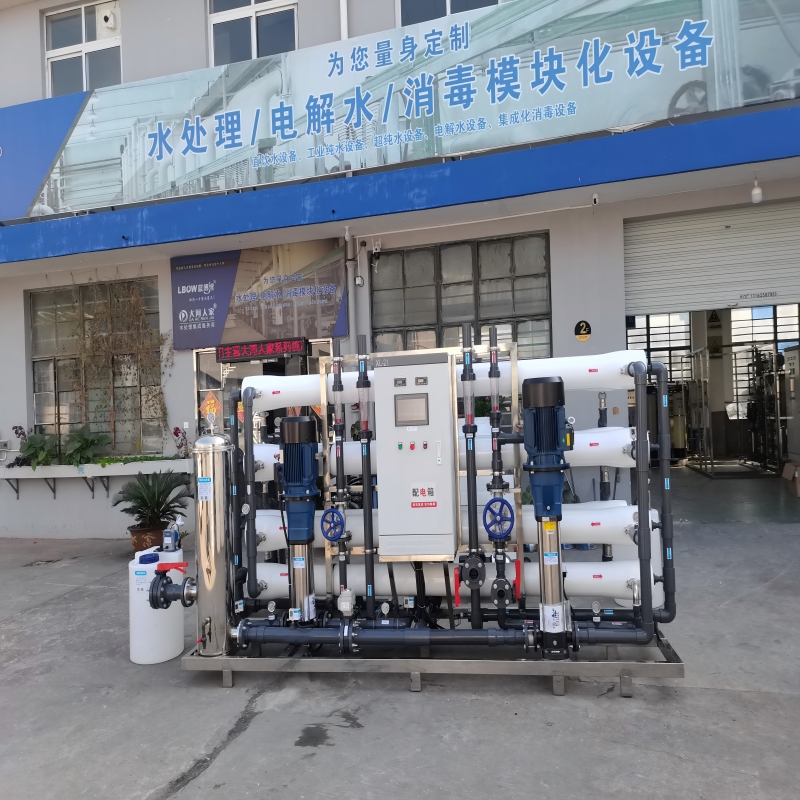
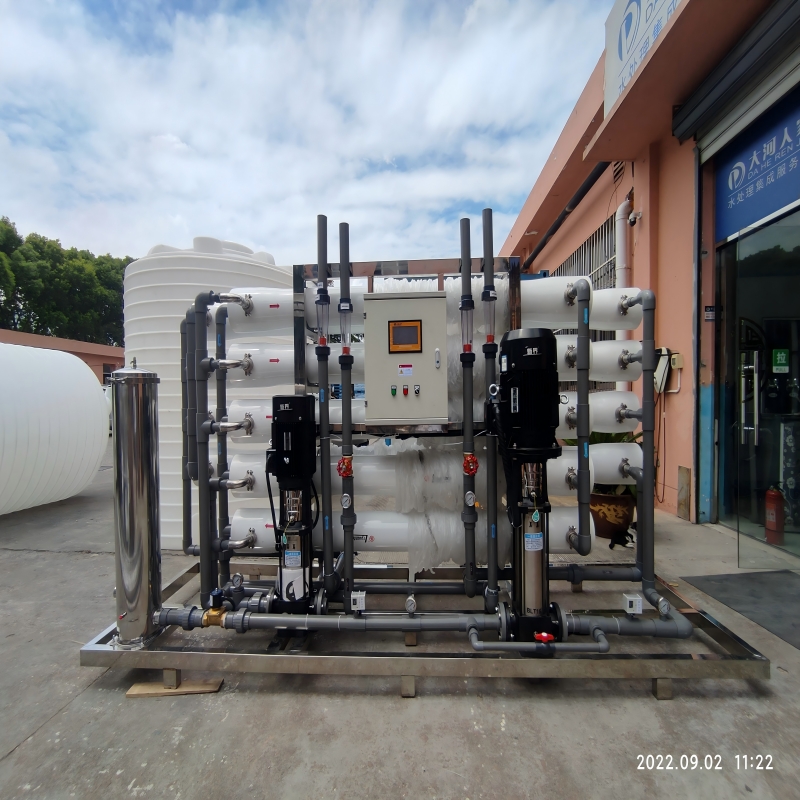
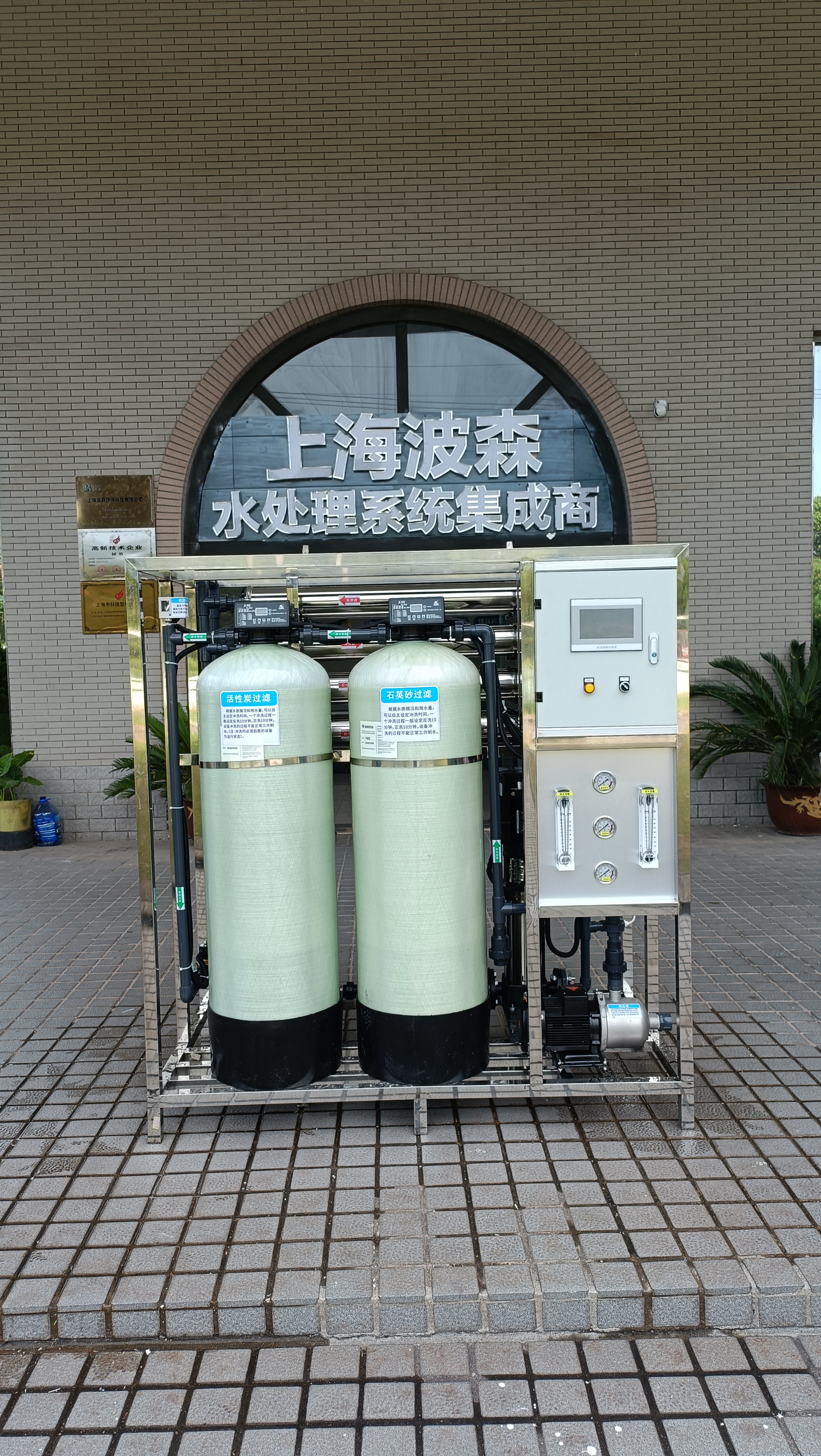
10-ton single-stage reverse osmosis system (10,000 L/H)
Principle · Process Flow · Application Fields
I. Working Principle
This system employs single-stage reverse osmosis (RO) membrane separation technology, leveraging the selective separation mechanism of semi-permeable membranes driven by pressure: when the feed water pressure exceeds its osmotic pressure, water molecules permeate the membrane to become product water, while dissolved salts, cations and anions, organic matter, colloids, bacteria, and viruses are retained on the concentrate side and discharged; this enables efficient desalination and purification. A single-stage RO process yields stable, compliant desalinated water, making it widely suitable for the deep desalination of medium-to low-salinity water sources such as brackish water, surface water, and municipal water supplies.
The single-stage RO system features a simple design and streamlined process; when the influent water quality meets the required standards, it can achieve a desalination rate of ≥98%. Compared to a two-stage system, this configuration consumes less energy, occupies less space, and is more cost-effective to operate.
• Selective separation: A semi-permeable membrane retains dissolved salts, ions, organic matter, colloids, and microorganisms.
• Pressure-driven desalination: Desalinated water is produced in a single pass; desalination rate ≥98%
• Energy efficiency and cost-effectiveness: The single-stage design consumes less energy and occupies less space compared to the two-stage design.
II. Process Flow
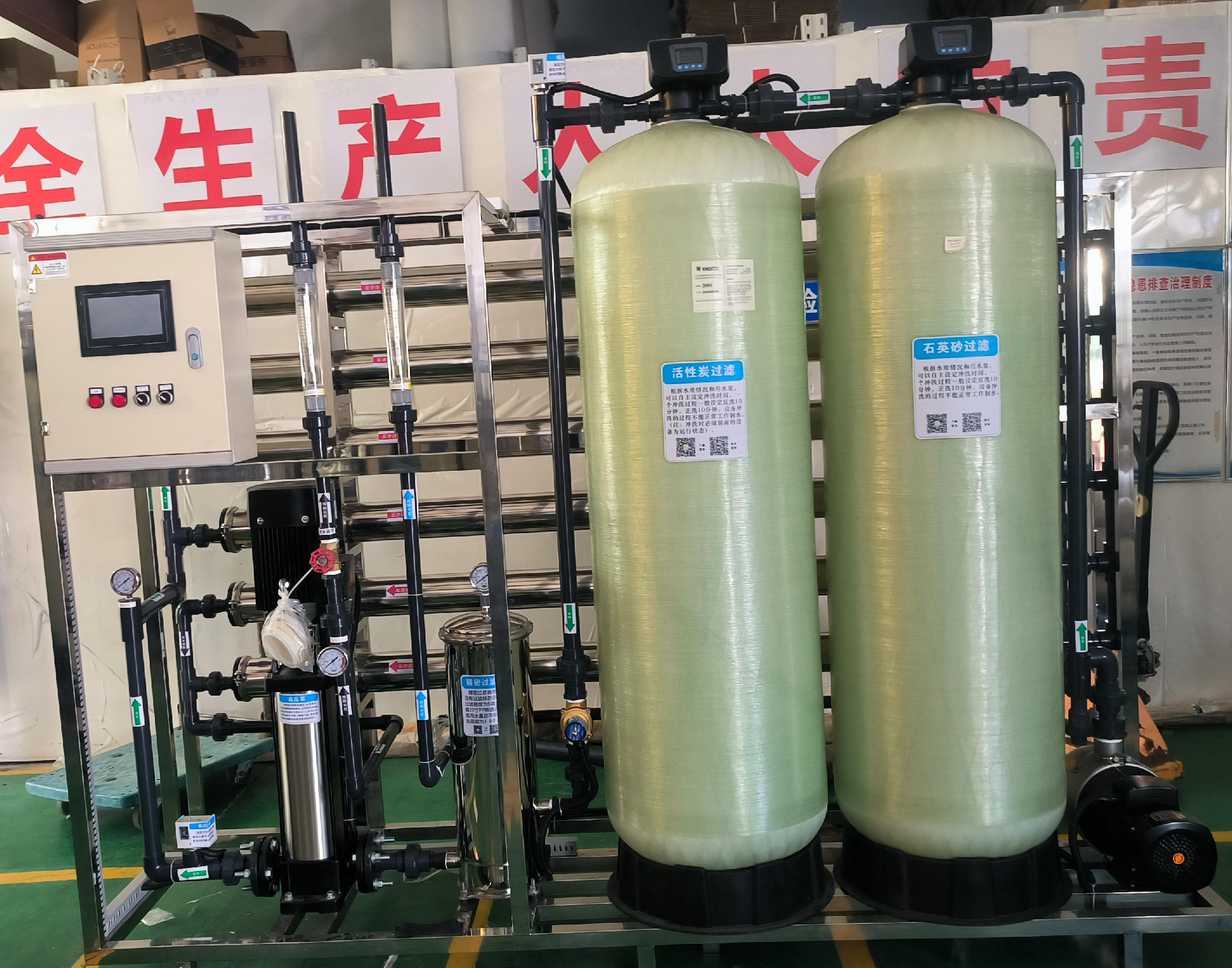
The system is divided into three major functional sections – Pre-treatment and Pressurization Section, Single-Stage RO Desalination Section, and Product Water Distribution Section – with a rated production capacity of 10,000 L/h (approximately 10 m³/h).
Raw water → Raw water tank → Booster pump → Pretreatment (multi-media filter / activated carbon filter / safety filter)
↓
High-pressure pump → Single-stage RO membrane stack (automatic flushing)
↓ (RO treated water; desalination rate ≥ 98%)
Water production tank → Distribution pump (constant pressure) → Water usage point
(RO concentrated water discharge in compliance with regulatory standards or reuse)
① Pre-treatment and Boosting Section
The raw water is first buffered in a raw water storage tank, then sequentially passed through a multi-media filter, an activated carbon filter, and a safety filter to remove suspended solids, colloids, residual chlorine, and fine particles. A booster pump maintains a stable supply pressure, providing clean, protected feed water for the RO membranes.
② Single-stage RO desalination section
The pretreated water is pressurized by a high-pressure pump and then fed into a single-stage RO membrane stack, where it undergoes deep desalination under pressure-driven conditions, retaining over 98% of dissolved salts, organic matter, and microorganisms; the treated water is stored in the product water tank. The system is equipped with an automatic low-pressure backwash function upon startup or shutdown to mitigate concentration polarization and membrane fouling.
③ Water Distribution Section
The RO treated water is buffered in a water storage tank before being delivered to all water usage points via a distribution pump operating at constant pressure; the entire system is controlled by a PLC-based interlinked control system, with real-time monitoring and interlocking mechanisms for liquid level, pressure, flow rate, and conductivity.
III. Application Areas
This system is designed to meet the deep desalination requirements for water sources with low to medium salinity levels – including industrial, municipal, and commercial applications – and is primarily used in the following scenarios:
• Industrial boiler make-up water: softening and desalination make-up water for power plants, heating systems, and industrial boilers
• Process pure water preparation: Water for cleaning and solution preparation in electronic, electroplating, coating and other industrial processes
• Food and beverage water: Deep purification for production water used in brewing, beverage manufacturing, dairy products, etc.
• Pharmaceutical purified water pretreatment: Pre-treatment desalination for pharmaceutical purified water systems
• Brackish water / surface water desalination: providing drinking water for sources with low to medium salinity and upgrading municipal water supply systems

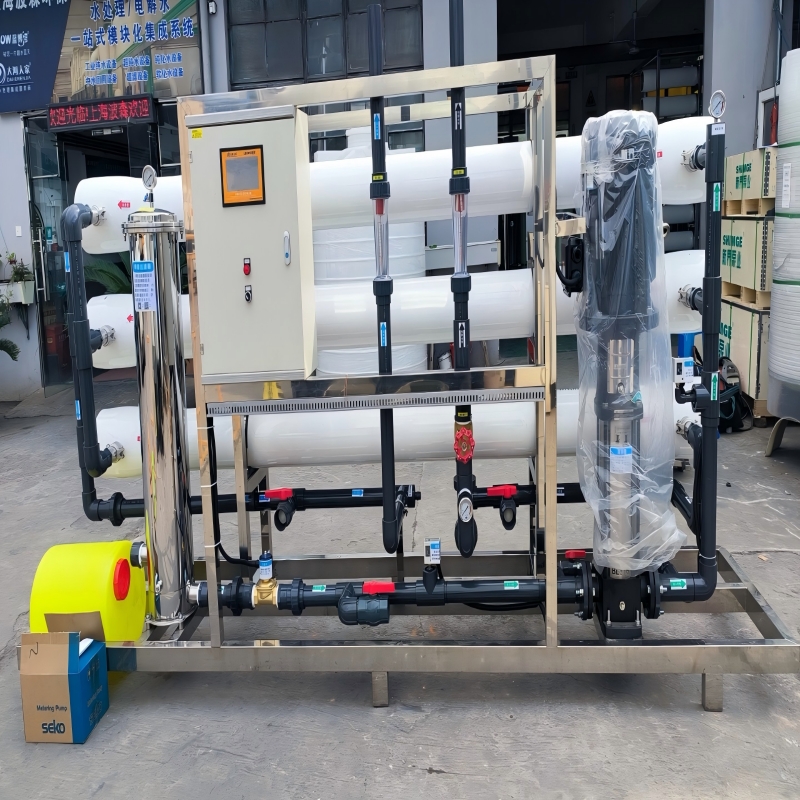
 Application